MULCH: A career grown out of dried flowers
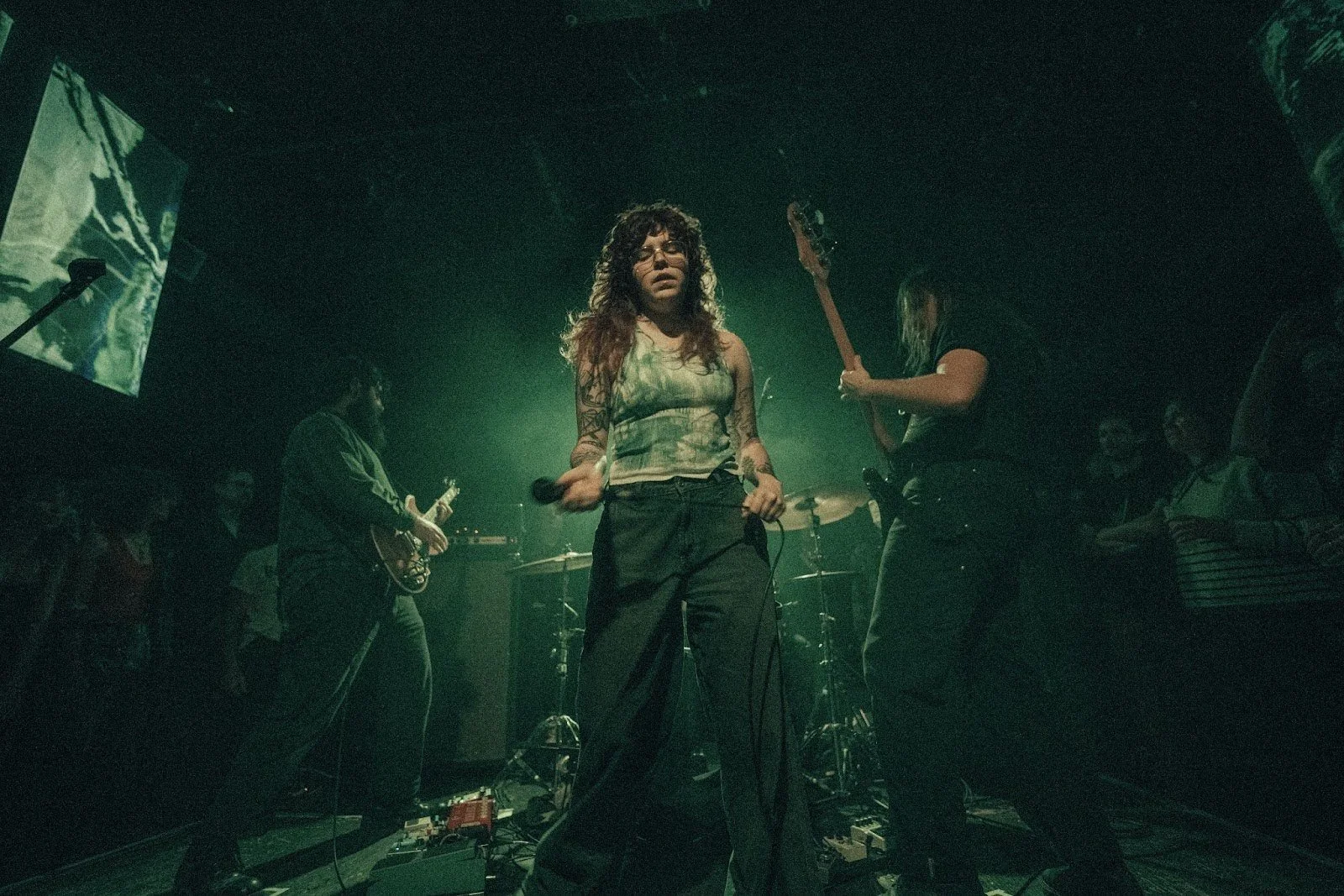
Photo credit: Alice Hirsch
Hardcore and loud music seems to be gaining momentum in Montreal right now. Think of the bands Puffer, Béton Armé, Truck Violence, Power Drop, White Knuckle and now MULCH. These shows, whether they take place illegally under the Van Horne Underpass or on large stages like M for Montreal, always bring together a community of rebels who want to express their legitimate anger and frustration at the rising cost of living in the city, the deterioration of the social safety nets or virtual life breaking down real-life connections.
Going against the current trend of our times, MULCH has chosen to embrace its punk roots to grow a band organically. Fronted by singer and photographer Rose Cormier, the band is a shining example of female leadership. She embodies the endurance and resilience of the old techniques that stand the test of time: analogue photography, video mixers, zines, radio shows, old-school social networks and… mulching. This conviction has made her an important part of the scene and she now works proudly as an artist agent for the renowned label Mothland. By nurturing and preserving this underground culture, she has proven that a career can actually flourish from old dried flowers. Cups N Cakes had the pleasure of speaking with Rose just before her performance at M for Montreal in December 2025.
Cups N Cakes: We've known you primarily as a photographer in the local scene for several years. Can you tell us about your beginnings and what drew you into the world of music?
Rose: I started taking photos when I was 15. My father was somewhat involved in that scene and he would take me to French punk shows like Fuck Toute and Oktoplut to take photos. I loved the action, the fighting, it made for great photos. I then continued with the help of Susan Moss, who is a photographer for Evenko. She must be 60 now, but she's been doing this since she was 20. She took me under her wing and helped me learn how to take photos and get a camera. Then I started taking analogue photos, and that format worked better. There's something about the image that gives it a more vintage aesthetic. I discovered photography from a different angle. When I started working at Turbo Haüs as a waitress, my boss Sergio gave me the opportunity to take photos during the shows. So I started taking digital photos again, but with a more vintage effect. I realised that something had clicked at that moment. I got hired for my first show at Casa Del Popolo with the band Kennedy, a hardcore punk band that no longer exists but still does a few comeback shows. It was really emotional, with people passing the microphone around and shouting. It made for some great photos. Everything took off from there.
CNC: Your pictures are recognised for their high quality and distinctive style. They have a vintage aesthetic reminiscent of the 1970s. Can you tell us how you have developed your style over the years? What inspires you?
Rose: In all the different aspects of my life, I often find myself drawn to more vintage things, from the 1970s, whether it's architecture, design, photography, or even clothes. I still have old glasses frames with a vintage look. I think I naturally wanted to capture that. I like colour shots, high contrast, old show photos that have been recoloured. I've discovered my own style through all that. There's also the framing aspect, the subject of the image. Most hardcore photos are in black and white, with a big flash, a bit more action-oriented. I prefer portraits frozen in time, with a more poetic vision.
CNC: You are now an artist agent for the label Mothland. Can you tell us what your job consists of?
Rose: Mothland is not a booking agency; we are first and foremost a label. We operate a little differently from other booking agencies in the sense that all of our booking artists are artists from the label. This happened by default because some of our artists didn't have booking agents. It's important for us to send our bands to play elsewhere.
My job mainly consists of writing emails. Lots of emails (laughs). Offering our bands to venues and festivals, trying to get them to play in places they've never been before. I also sometimes attend conferences. I'm going to Calgary for a week to meet people in the industry and try to send them out to Western Canada. There's M for Montreal next week, which is a good way to network. Those connections then turn into emails. It's important for us right now to find bookers in Europe, but also in the United States.
CNC: You also create visuals during certain Mothland events. We saw you at work during Yoo II's concert and during Alix Fernz's launch, for OLGA and Crasher. You use analogue equipment, with video feedback. How did you get into this practice?
Rose: I really like anything related to visual art in general. When I was in secondary school, I had an extracurricular project in science. We had to do an experiment related to sound vibrations using oil and milk, a bit like a liquid light show. It really made an impression on me. The project was presented in a gallery and during the Elektra festival. I got back into it and started doing liquid light shows again, first with a simple conventional projector and then with my computer in Premiere. I did projections like that for two bands and then wondered how I could take it to the next level. So I fell down a rabbit hole on the internet about analogue technology. So I bought myself an analogue mixer, an Edirol V4. I started experimenting with that and camera feedback. It was pretty intuitive. I also have another mixer, a video synthesiser that adds big glitches, which I used during the Crasher performance, for example.
CNC: Since you're a woman who isn't busy enough, you've also started working on ICI Musique Rock's programme Détecteur de Métal. It airs every night from 9 p.m. to 1 a.m. What is the purpose of the programme?
Rose: The show airs every night at 9 p.m., but my segment airs on Tuesdays and Wednesdays. They launched four continuous radio stations in Canada with the aim of providing another streaming option for artists. I think Suzy Veilleux is behind the project. The fact that Radio Canada is creating a platform for rock and metal is really a touching gesture! There's also Jason Rockman, well known in radio, who will be covering all the big metal acts. Jolène Ruest is more involved with female artists in the metal world. I'm more involved with Canadian and Quebec rock programming. I've focused on punk and metal bands in the broadest sense. I've included Puffer and Béton Armé. All these artists will have their music streamed once a week; all these songs have been purchased. I'm really happy to include these bands.
CNC: You're also the singer for the hardcore punk and noise rock band MULCH. How did that band get started?
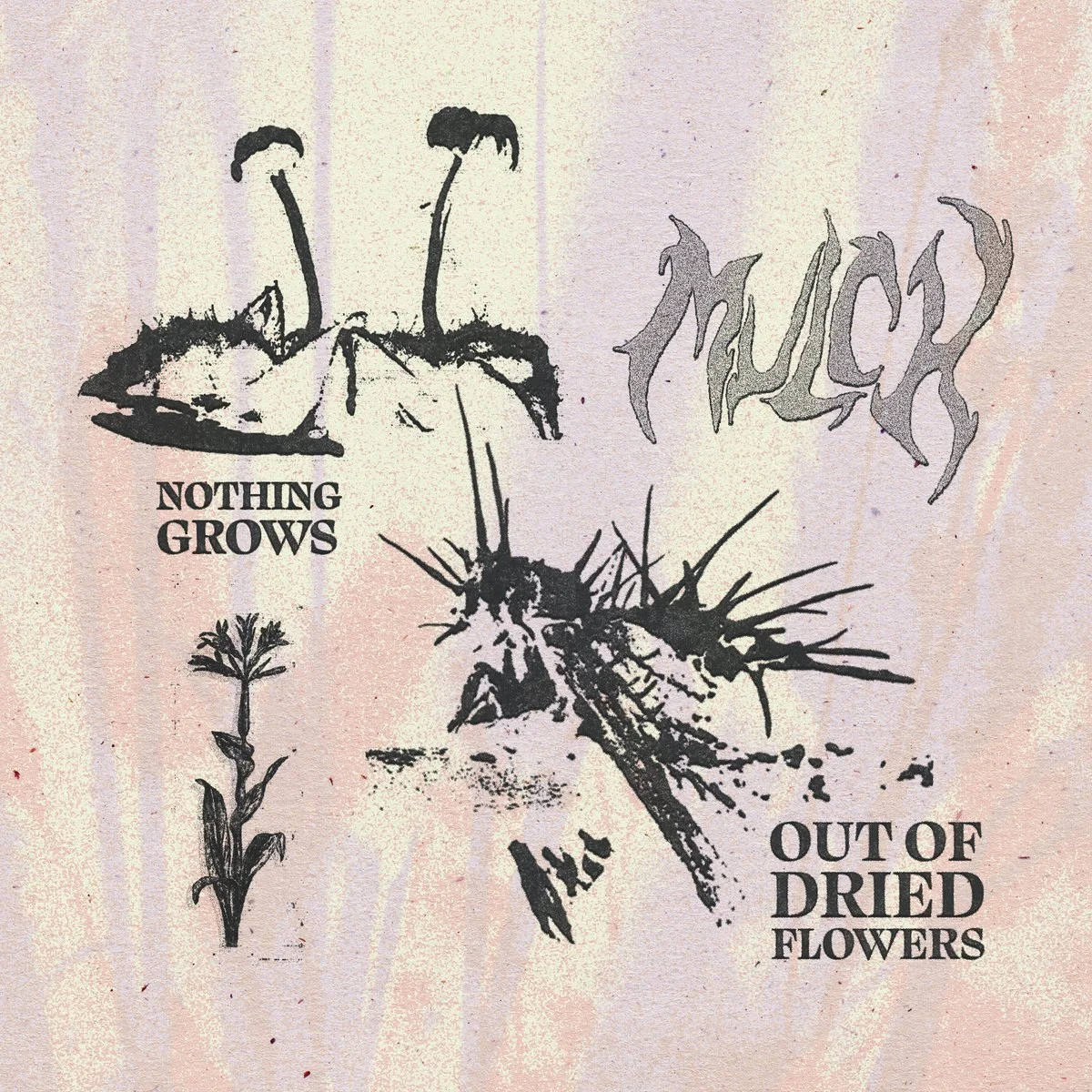
Rose: It must have been two years ago. I have a lot of friends in the scene, I go to a lot of shows. People were always telling me I should start a band. With punk, you can always start a band. You don't have to be good, it doesn't matter. It's very democratic, that's what it's for. I started the band with my friend Tyler, who is also the drummer in Typeface and the guitarist in Rat Piss and VVOMB. Timothy had some guitar riffs and joined us. Will played with Tyler. It happened very naturally. Tyler was busy, so Michael replaced him on drums. He's basically a drone drummer, so he brought another dimension to the band. It was difficult to start a band without a goal, so we found ourselves a 10-minute show with five other hardcore bands. We then kept going. We're lucky to have connections in the scene. This is really my first band. The funny thing is that I have no sense of rhythm at all. I tried the drums but I couldn't do it. My other musicians have been in bands since they were 15. Being a vocalist is a good place to start in your first band. It's all about attitude and the scene. We released two EPs, which are a bit off the beaten track of punk and we're currently writing an album, but it's hard.
CNC: You joke around saying that MULCH plays frog punk. Is that swamp punk?
Rose: I really like frogs in general. We also make that joke because we have guitar sounds that are low-pitched, like a kind of frog. We also remember that the term ‘frog’ has long been used as a derogatory term against Quebecers. Unintentionally, it has become a double meaning. We didn’t want to define ourselves as art punk or noise rock. I have a hard time with genres.
CNC: Your lyrics are generally quite dark and pessimistic, but they also reveal a beautiful resilience. What are you expressing in your songs?
Rose: Screaming in a band is very cathartic. I don't think we scream enough. After a long week at work, getting together for a jam session and screaming for an hour makes you feel great afterwards. When I don't go for two weeks in a row, I feel the need to go. But generally speaking, I write in journals, poetry, for myself. I write a lot about my life, being a woman, how others see me, my relationships. I write a lot in questions. Just shouting them out and getting them out feels good.
CNC: You wrote the other day in a social media post that it was difficult to be a woman in the music industry, particularly in the world of metal. What do you mean by that?
Rose: It's still very much a male-dominated environment, both in the press and in booking agents. It's like a boys' club. I often find myself as the only girl at a hardcore punk show or Alice Hirsch, who is a non-binary person who takes photos. I've often been the only girl in everything I do, but guys don't think about it. I find that you have to work twice as hard to be taken as seriously as a man. Especially in music. It's still often the case that line-ups are made up entirely of men. I've also experienced minor incidents of aggression as a woman and a female photographer. We still need to make sure that these spaces are safe for women. Especially for non-binary people and visible minorities.
CNC: You are very involved with the DIY scene that plays under the Van Horne Bridge and which can be found on the Montrealaskapunk.com website via the decentralised social network Mastodon from 438 PUNK HOUSE. Can you tell us about the importance of these alternative, self-managed channels?
Rose: Instagram and social media in general are the worst thing we've ever done. Unfortunately, all my work is on there. Meta is a surveillance state and society. Having these channels self-managed by other servers provides an alternative. This network is managed by the people who make the zine La Chaîne. Some of my friends only use these channels now and are still able to keep up with what's going on. It's much more social than social media, where you just look at numbers. We have real conversations, a bit like in the days of blogs and MSN. Ideally, we'll have to go back to that. It's important to remember that there are other ways of doing things. It's important for me, as someone with a foot in the industry, to maintain a connection with the DIY world and my friends. It's a more community-oriented environment, where we were able to raise funds for the Drug User Liberation Front (DULF), for example.