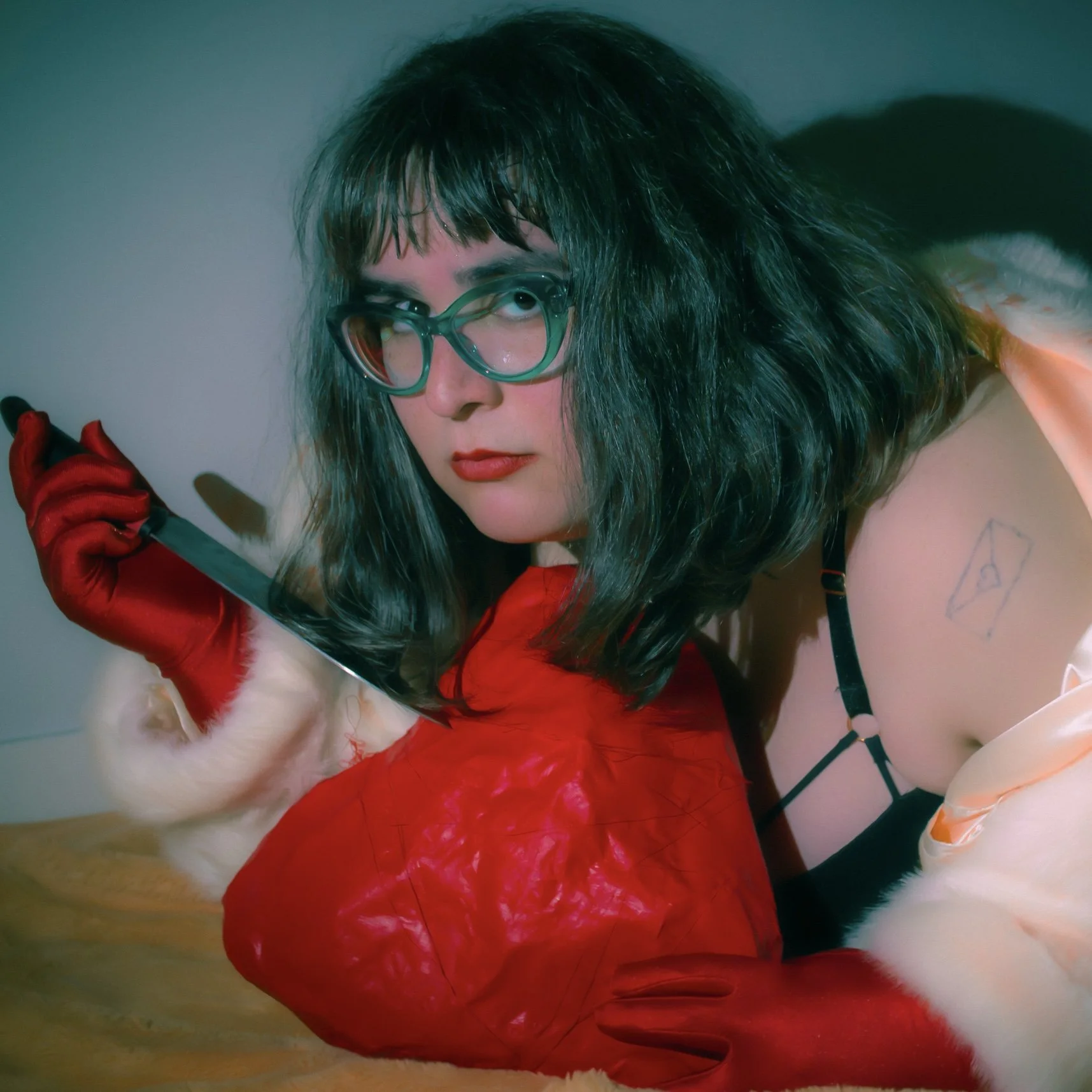
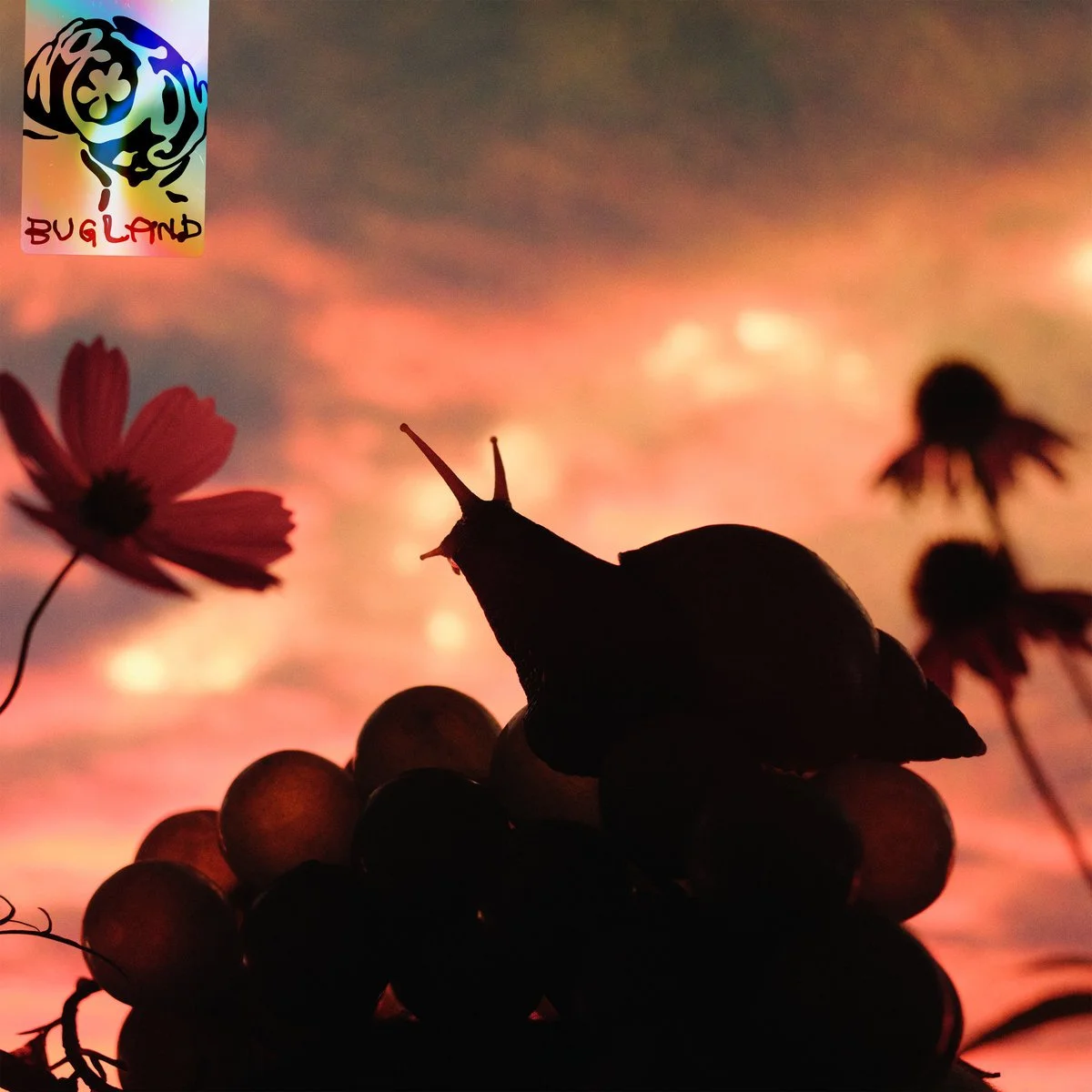
NO JOY - Bugland
Hand Drawn Dracula
Released on August 8th, 2025
Admittedly, it took me a while to pick up a NO JOY album — they simply haven’t been on my radar until the release of their fifth full-length record, Bugland. This Montreal act has become Jasamine White-Gluz’s brainchild over the past few years, leaving a trail of spanning from No Joy’s debut album Ghost Blonde (2010) all the way to their last record Motherhood (2020) when the project settled into White-Gluz’s solo project.
Throughout most of the project’s run, NO JOY has moved from a straight forward approach to lofi shoegaze to a highly defined indie rock sound. But with Motherhood, the project became harder to define through genre labels as elements of triphop, dreampop, shoegaze, noise rock, new wave, and whatnot made their way into NO JOY’s sonic palette and artistic direction. In fact, White-Gluz sees Motherhood as the album where she got to define her own artistic vision. Bugland proceeds from this major change to what NO JOY puts forward into her music.
Much like the project’s prior releases, Bugland has received critical acclaim including a Best New Music review by Pitchfork’s Sadie Sartini Garner. The album’s development is framed by a collaboration between hypervaporwavista Fire-Toolz (AKA Angel Marcloid) and White-Gluz that took place when they secluded themselves from civilization in the woods, oftentimes listening to mixes while driving through rural roads. Fire-Toolz refers to the collaboration as being more akin to a band member than an outsider contributing pitches and production. This helps bolster the groundwork that White-Gluz paved with Motherhood into an album thriving in collaboration and experimentation.
The album starts out with “Garbage Dream House” with a slowfading thriving through a freeplay of glitchy electronic pads which give way into a more straightforward shoegaze song after a crescendo. The groove of the track sinks in, and it gets punctuated by the noisy bridge that ties all these mixed musical elements together only to get into a soothing outro with strings and synth pads. The transition from this track to the titular “Bugland” is masterfully done as the glitchy crescendo returns into the clean cut beat of a comparatively more industrial track. All the energy built up in the first track finds its way into this second track with its intense beats and punctuating noisy basses as well as its more dreamy vocals and synth pads. “Bits” goes between a shoegaze track that progressively gets more loud and intense to a more dreamy and reflective new wavey kind of sound — you can perhaps see some aesthetic choices that reflect Fire-Toolz’s production between the dreamy bells and glitchy drums. Based on a true story, “Save the Lobsters” brings the energy down for a bass driven synth soundscape where pianos and bells build on its steady groove. Even when drums hit in the chorus, the song retails its underlying reflective softness to which it eventually returns. “My Crud Princess" might be the track that jumps between sounds the most, from a punky kick off to a dreampop groove over to a synth driven breakdown only to come to an instrumental break, where the mixing between all the elements shifts so radically as to bring to life different aspects that make up the song. “Bather in the Bloodcells” is also close to this variety with its metal-sounding guitar and drum grooves along with its more synthpop-oriented vocals and synths, the track oscillates between this, 70s style guitar groovers, and an incredibly dynamic instrumental break bringing elements of industrial music. “I Hate that I Forget What You Look Like” might be the most straightforward shoegaze track in the album which stabilizes the record’s pace from the dynamic genre bending from the rest of the album and the final track. And “Jelly Meadow Bright” ends the album with a soft ambient track filled with beautiful vocal mixes and a variety of arpeggios and guitar riffs giving the track a deconstructed groove. As the longest track in the album, this closing track has a lot to offer in its production and composition with elements of free jazz, breakcore, ambient music, dreampop, prog rock, and whatnot. At times there are elements of math rock and even hardcore vocals that are almost reminiscent of Machine Girl given the spacey and glitchy electronic vaporwave elements underneath it all. This track gives something fascinating to listen to — should have seen my face when I heard a saxophone thrown into the mix, damn.
There is an air of naturalist mysticism to Bugland that White-Gluz openly embraces with her depiction of the titular Bugland as a place of safety withdrawn away from the accelerated state of the music industry and capitalist demand which White-Gluz looks at with suspicion. Bugland takes what Motherhood was able to accomplish for White-Gluz’s creative development while adding collaboration to the mix to help bring out more out of that artistic direction. Lives up to her extraordinary expansion of shoegaze as a concept: “Think of it this way: if shoegaze music is lasagna, the only thing that matters is if it’s layers. Those food floors could be made of anything — the important thing is it’s layered and tastes special.”