Leanne Betasamosake Simpson - Live Like The Sky
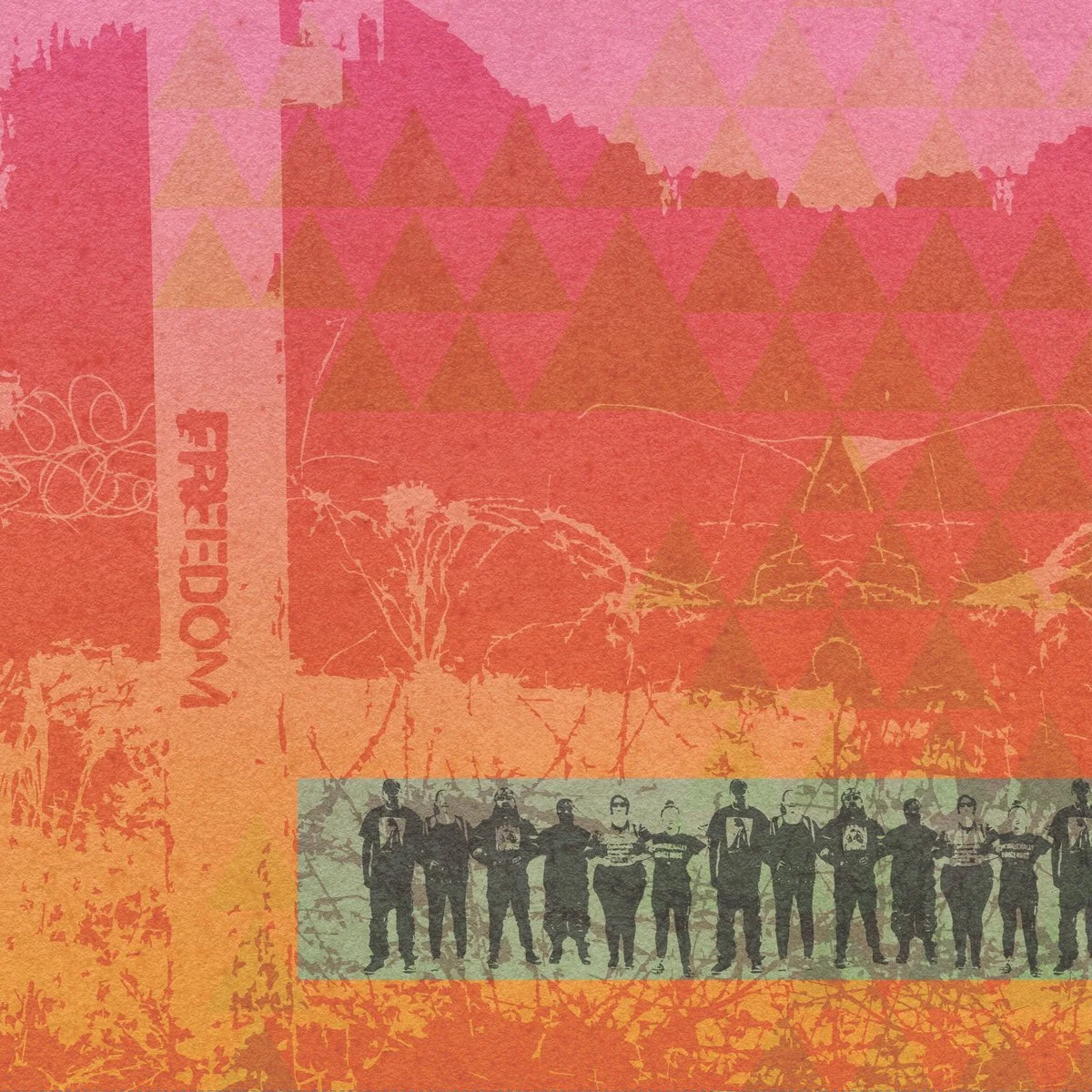
You’ve Changed Records
Released on October 24th, 2025
There is a wave of sound brewing across the Canadian music landscape: moccasingaze. The term was coined by Anishinnaabe musician Daniel Monkman (aka. Zoon), a pioneer of this genre subversion through the Indigeneization of shoegaze which has become a banner inclusive of other acts like Monkman’s collaboration with Adam Sturgeon (from Status/Non-Status) in OMBIIGIZI, the powerhouse of nêhiyawak with talented members such as Kris Harper, Matthew Cardinal, and Marek Tyler — notably Cardinal’s track “May 25” out of Asterisms was featured in the opening of Stranger Things season 5 and Tyler recently wrapped up touring following the release of ASKO’s debut self-titled album. It is this constellation of musicians that I place the work by another of Monkman’s collaborators: Leanne Betasamosake Simpson.
Leanne Betasamosake Simpson is simply a creative and intellectual radical force to be reckoned with. Her work extends beyond the boundaries of music alone as she is a notable figure in Indigenous resurgent politics as well as an incredible author blurring the lines between poetry, political philosophy, and memoirs. My first encounter with Simpson’s work came by way of her dialogues with Naomi Klein on decolonization, ecocide, and political uprisings — in particular, the interview in Yes Magazine (2013) where they discuss Idle No More and “extractivism” (a neologism denoting the expropriation of cultural and intellectual resources of a living community in a manner parallel and coextensive to colonial resource extraction).
Along with her colleague and author of Red Skin, White Masks UBC political science professor Glen Coulthard, Simpson has honed in on significant concepts such as “grounded normativity” and “place-based solidarity” stressing how “Our relationship to the land itself generates the processes, practices, and knowledges that inform our political systems, and through which we practice solidarity.” And on her own, Simpson has authored multiple books such as As We Have Always Done: Indigenous Freedom through Radical Resistance (2017) as well as the recent book Theory of Water: Nishnaabe Maps to the Times Ahead (2025).
As a musician, Simpson has been critically acclaimed, with her sophomore album Theory of Ice (2021) making the 2021 Polaris Music Prize Short List. And this year we are blessed with her anticipated follow up album Live Like the Sky. In line with the uncompromising work of her oeuvre at large, Simpson’s work holds onto the project of resistance by embracing the aesthetics of moccasingaze, finding a sound suited to making both a rebellion and homespace in the creative output of Zoon, Status/Non-Status, and OMBIIGIZI. At heart, Simpson’s creative and intellectual work concerns the complex struggle of re-worlding, the making of an otherwise, the establishing of possibilities, and the nurturing of a difference in light of the homogenizing forces of colonial capitalism and fascism. In this sound, Simpson turns to her personal history growing up in rural southwestern Ontario where discovering alternative ways of music in punk, new wave, and goth offered such an opening to the horizon of her imagination.
The album kicks off with “White Kites and Blue Sky,” driven by a lofi drum machine progressively adorned by a clean guitar riff and Simpson’s lush vocals lyrically building a sense of being captive as the song progresses in complexity. Slowly, this gives way to those elements of moccasingaze with layers upon layers of guitars, vocals, synths, and percussions amping up the tension of the song intensifying as the drum fills hit harder leading up to the outro. In “Niizhoziibing,” Simpson turns to the sharing of place and space with friends after experiencing the severing effects of separations during the COVID-19 pandemic, a sentiment enhanced by the sense of togetherness delivered through the backing vocals throughout the track. Instrumentally, the lush guitars and underlying synths create a glittering ambiance over the steadiness of the drum beat with a mixing and composition at times reminiscent of Cassia Hardy’s work in her solo project as well as Wares.
The energy picks up as “Murder of Crows” kicks in as one of the highlights of the album for me. I find that the composition, mixing, and overall aesthetic in this song shows off how Simpson achieves that sound that inspired her throughout the album, with the layered instrumentals while having reverbed and delayed effects blurring their lines while nonetheless keeping a definite sound across the board. Simpson’s voice is mixed delightfully well in a way that she sweetly delivers words of protest in harmony with the instrumental mix. “No Line Could Make Sense of It” offers a darker and gothier sound, driven by a spoken word vocal then turning to singing out the relationships between the liminal thresholds between land, water, and sky resisting the arbitrary demarcations of borders — musically, think of something like Broadcast’s “I Found the F” or The Sugarcubes’ “Traitor,” and you will see how Simpson makes that sound her own. This sort of influence and thematic edge continues in “Disintegrations,” where the undoing of these forced forms onto the world give way to new possibilities which are musically articulated by the ambience driven by synths, guitars, and vocals. As another highlight in the album, it really feels like this far into the album, Simpson has fleshed out her own sense of moccasingaze as the song goes from a more formless beginning to moments shaped by the intensifying rhythmic and instrumental elements coming together to build up to the outro.
“85 Dollars an Acre” brings us back to a steady groove reminiscent of Carsick Cars’ “Zhong Nan Hai” with a folksy twang to it. The rhythmically hypnotic vocal reciting Michi Saagiig Anishnaabemowin lyrics is a prominent feature that drives a song that could risk being repetitive, but Simpson takes us into a poetic picturing of relational responsibilities in contrast to colonial extractive tendencies. “Ossuary” continues this steady narrative poetic recitation of spoken word unpacking damaged relationships, the intergenerational traumatic weight and its present consequences — there is a contrast between the recipient of the lyrics who is depicted as someone still finding enough trust in the world to let it all out, as opposed to the lyricist whose resistances are felt once the singing kicks back in lyrics such as “me trusting you with nothing, trusting me with nothing.” In immediate dialogue with this, “Her Turn to Speak” offers reflexive words of encouragement in witnessing this resilience as this set of spoken word tracks build to an airy layered sound repeating the refrain “no line could make sense of it” from the track of the same name.
The final stretch of the album returns to a more conventional vocal delivery with “Spoons,” where Simpson continues this narrative of resilience into giving grievances a direction. The chorus picks up the instrumental energy for a generally slow song, often punctuated by the showering backing vocals as the lyrics become more to the point. Then, in “Minode’e,” Simpson returns to a more gentle atmospheric post-punk in a song wholly in Michi Saagiig Anishnaabemowin. The lyrics use the particular vocabulary of the Alderville First Nation to offer a warm invitation through an expression of care. And the album ends with “Pyrrhic Victories” which looks at the depth of the impact of everything lost along the way while retaining an underlying optimism which instrumentally shines through the second chorus as the melodic guitar rift sweetly elevates the mood of the track. The track tries to find something to hold onto in the shuffle of chaos, a moment of repressive regimes that tries to sever us from the very relationships that are our way out.
Across the board, the album hits all the notes of a dreampop and shoegaze album feeling almost contemporaneous to releases in the late 80s and early 90s. Nonetheless, the Indigeneization of the genre adds an extra-oomph of consequentiality to its themes and concerns, all the more excellently done by Simpson who is a defining voice of the conversations and projects of collective liberations that the album is concerned with. In this way, Live Like The Sky states that living like the sky is to find a collective freedom in the fugue of contemporary colonial capitalist society — the point at heart is relational and connective insofar as that’s the very way in which the fabric life is enlivened rather than decaying into a state of living death.
As a music fan, there is plenty to hold on to and enjoy in this album — especially in tracks like “Murder of Crows,” “No Line Could Make Sense of It,” and “Disintegrations” which stood out to me personally. However, given the breadth of Simpson’s work, I cannot help but encourage any involved lister to engage with her literary and academic work — along with work by the likes of Glen Coulthard, Billy-Ray Belcourt, Cassia Hardy, and Taiaiake Alfred. Not just because of the way in which it can flesh out the profundity that can be found in this album when looked at from that informed angle, but because Simpson is a pivotal figure in articulating the systematic concerns for Indigenous resurgent politics. Crucially, this album tries to remind us and call us to be responsible for and respectful of our relations to one another and the land, since they can easily become neglected under the banality of everyday life under colonial capitalism which renders us disposable, replaceable, exploitable and exchangeable. After all, we are more than just music listeners and music is solely one vector of being in relation.