Significance, Otherness - Burs
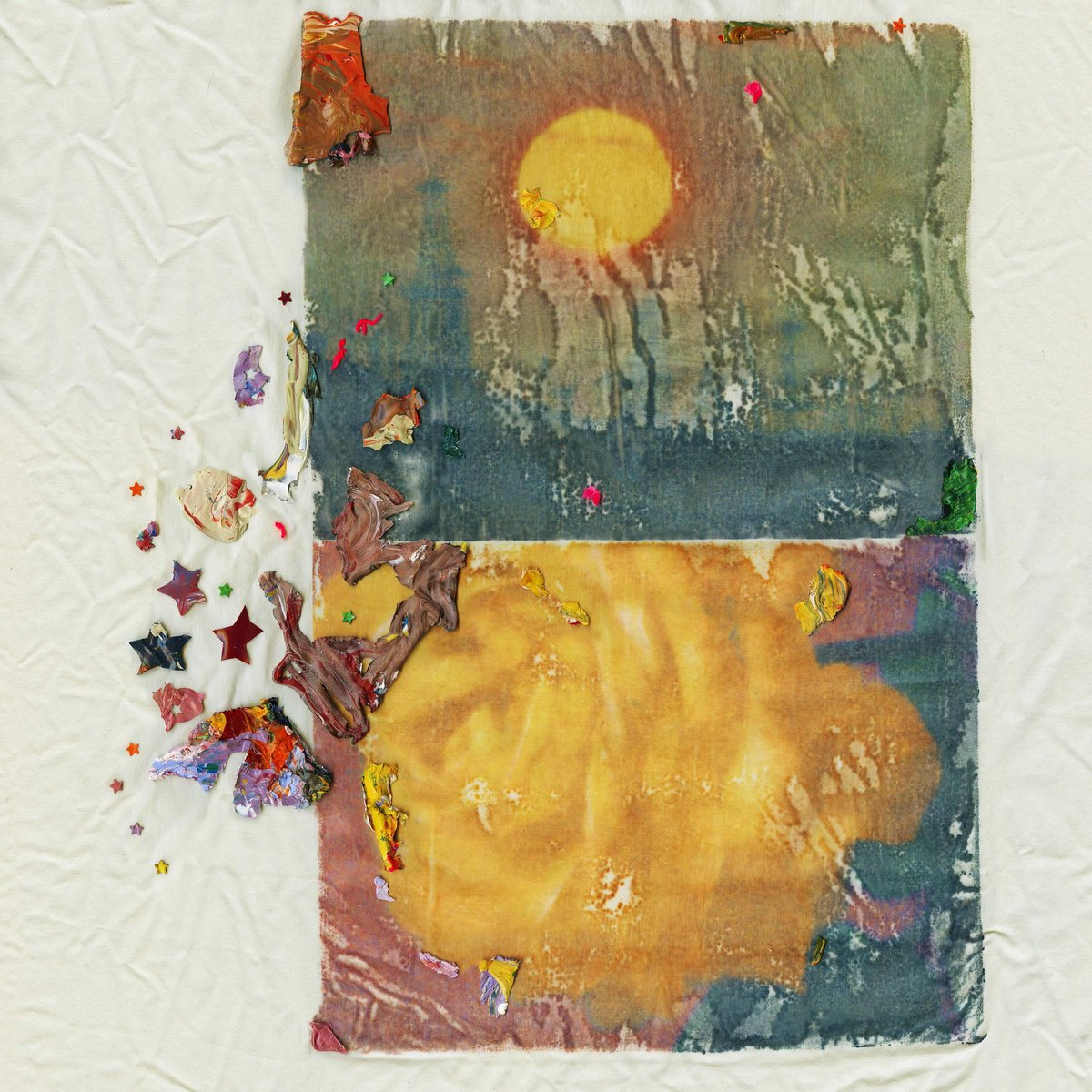
Birthday Cake Records
Released on November 25th, 2025
Over the past few months, I’ve been thinking more about the work that goes into producing a good folk or a singer-songwriter album. I usually tend to itch for the extremes of the avant-garde and the cutting-edge in my listening — something something hyperpop girly vibes, etc. But a conversation with Bells Larsen got me thinking about what I think is a genuine concern: Is folk and singer-songwriter music something that gets looked down upon by music critics and reviewers? Or rather are these kinds of music neglected or looked over in favour of something that feels shiny and new?
Although this is not exactly how Bells framed this question, this formulation is what stuck with me. In the last couple of years, I tried to pay more attention to this kind of music, because I found that at least I stopped taking the time to listen to it as much once I became fixated on audio engineering and sound design. Along the way, after digging deep into Big Thief and Adrienne Lenker, I ended up reviewing albums by the likes of Sister Ray, Georgia Harmer, Robert Adam, and of course Bells’ own music. And I found a renewed appreciation for this music through the lyrical poetry that makes the songwriter’s words hang heavy over my head or the engineering that goes into creating a sense of ambiance that holds the sound of musical moods. I guess this is all to say that just because a sound is not “in your face” about itself, it doesn’t mean that there is nothing to pick apart in it.
This brings me to Burs — again, shout out to Bells for introducing me to their music — as they have released an album that is exemplary of these finer details that can be found in folk. Burs is a Toronto-based folk quartet whose debut album Holding Patterns (2022) quickly brought a spotlight towards them. As I learnt about them, I picked up on the anticipation built around the release of their sophomore album, Significance, Otherness.
At its core, Significance, Otherness works its way through an underlying philosophical question: How are the ways in which we find meaning / significance / purpose tied to what is other than ourselves? Today, there is a pervasive individualistic outlook that suggests that meaning is self-made, so letting the other in becomes a compromise to its authenticity. However, Burs offers a musical challenge to this contemporary inclination by suggesting that significance and otherness are in fact two sides of the same coin. And through a folk demeanor, Burs emphasizes the more discreet and quiet parts of how otherness shapes our relationships in life (family, friends, community, etc.) by cultivating a sense of delicacy and intimacy in their musicality.
Significance, Otherness starts off with the conversational and introspective “All the Stops,” which stages a dialogue on self-love within the track’s songwriter, Ray Goudy. Adored in lush spacious strings, the tightly reverbed vocals spell out the rush that blurs a sense of self and an appreciation of that self. A key feature of this album is quickly presented: its ability to play with sonic space to create immensely vast emotive moments just as much as the smaller ones. This is particularly something that hits at the emotional core of the song’s second chorus where the mixing builds on the lyrical appreciation of oneself, the good and the bad, as the first chorus’ lyrics “I’ve got my mother’s eyes / And my old man’s pride” are turned around into the core insecurity to this self-love “I’ve got my mother’s fears / And my old man’s hurt.”d
Throughout this album, three of the band members take turns writing the songs. Accordingly, Lauren Dillen’s “Little Heart” follows up as the second track, which is a single that hits more indie rock sensibilities than the folkiness featured in “All the Stops.” This track continues its own enquiry into love with a heartbreaking look into the dissolution of a relationship after the speaker does not give herself to her lover to offer giving birth to a child. The track is poetic but forthcoming with this narrative, playing out the theme of time passing and the sense of missing out on something along the way. Even then, there is an irreducible love, the titular “little heart,” that remains in spite of the heartache that thorned around it.
This is followed by Devon Savas’ “Is There Anybody Up There” takes on the ambiguous questions hanging over one’s head in death. The otherness here is as simple as the speculative elsewhere where everything is set to some all-too-human peace that the speaker asks about. Musically, the song is toned down to an appropriately moribund pace in energy and instrumentation up to a point where denser and noisier instrumental elements mix themselves in, as if to create a sense of passage into something besides life as the last shreds of it spill along with the instrumental elements deconstructing into a few moments of silence.
Then “Country Song” gives way to the folkier side of Burs once again. Although here we have a bit of a twist, as halfway through the song, it musically explodes into a melodic textured ambiance that is nothing short of sublime. Then we are left with the contrast between the first half of the song and what follows the musical explosion, as it goes into an eerie (almost concealed) section that finds its way back to a more energized version of the chorus. What follows is the track “Free Being,” which asks evocative questions about our sense of freedom and how deeply it is a bound freedom if it is any at all: “I tell the truth of my free being / Sometimes it's love, sometimes it's fearing.” The song progresses from a spacious and sparse track that introduces elements evocative of early Sufjan Stevens towards the last third of the song — particularly thinking of the vibraphone as well as what I suspect to be an effected guitar that sounds almost like a wind instrument.
Then we have two singles. “Blackflies” brings one of the more energetic tracks in the album, where more distorted guitars come to show off a dirtier sound than the clean mixes that have been featured so far. “Blackflies” doesn’t shy away from leaning into this at opportune times, such as the glitchy intro or the noisier lo-fi outro which really make this track stand out. However, my personal favourite song might be “Soil,” which plays on a metaphor about what a land can withstand. It explores a sense of personal capacity and needs along with a responsibility for them. There is a sense of suspicion over others impinging and drying one’s resources, while casting light into an alternative found in mothering and nurturing that land as a way to build interdependence. Instrumentally and mixing-wise, the track features some of my favorite instances of how this album plays with sonic space.
Another of my favorite tracks is “IHAL.” “IHAL” is the last single of the record creating an intimate space, something akin to Georgia Harmer’s “Little Light” insofar as it feels as if you are in a dark room in the country with only a candle lightening the space. In fact, lyrically, there is a little light that is given as an offering to share and to see grow. Mixing choices around delays and reverbs really play on the minimalistic instrumental choices in this track, as progressively the track takes more space leading to a fuller arrangement by the band while retaining the ambiance set out so far. “An Hourglass” follows with a much brighter and straightforward alt-folk track revisiting the theme of time passing, the changing perspectives along the way as well as the things that we may hang on to for too long.
“Sorrows” is probably the most dynamic track in the album aside from being its longest take, notably due to its energetic midwest emo arrangement shifting to a softer indie song. Beneath all these motions, there is a grim sense of suffocating on fumes as the speaker is fading into their final moments. At times the instrumental energy comes back up with the distorted guitars or with a full section chance around the halfway point. Progressively this gets more intense, revisiting the energetic beginning as an extended instrumental break that just hits hard all around. This leads us to the shortest track which is the closing “Change is All Around Us Now.” After all the intensity that preceded it, the closing track is intentionally rough around the edges with all the ambient noise sipping into the mix. The contrast here hits quite effectively since it shows the range Burs has while also asserting their capacity for evocative choices in anything from composition and arrangement to lyrical poetry and mixing.
Mood. Narrative. Thematic exploration. These are a few of the things that predominate through Significance, Otherness as Burs’ sophomore album. Given its underlying question, it is not surprising to see a set of vignettes interweaving themes of love and death across space and time, as these concepts shape the human finitude of dependence and vulnerability as well as our capacity to transcend this and find something (perhaps infinite) in our cracks the same way that “Change is all around us now.” Across the album’s storytelling, the medium of music gets leaned on heavily with artistic and creative choices that enhance Burs’ exploration of these profound questions. The vignette narrative format offers disconnected stories that are nonetheless about connections, only enhanced by its lyrical and thematic interplay across the tracklist. And through audio engineering magic, all of this is sonically staged with delicate attention to the smallest of details.