Cryptozoologists – Backwater Station
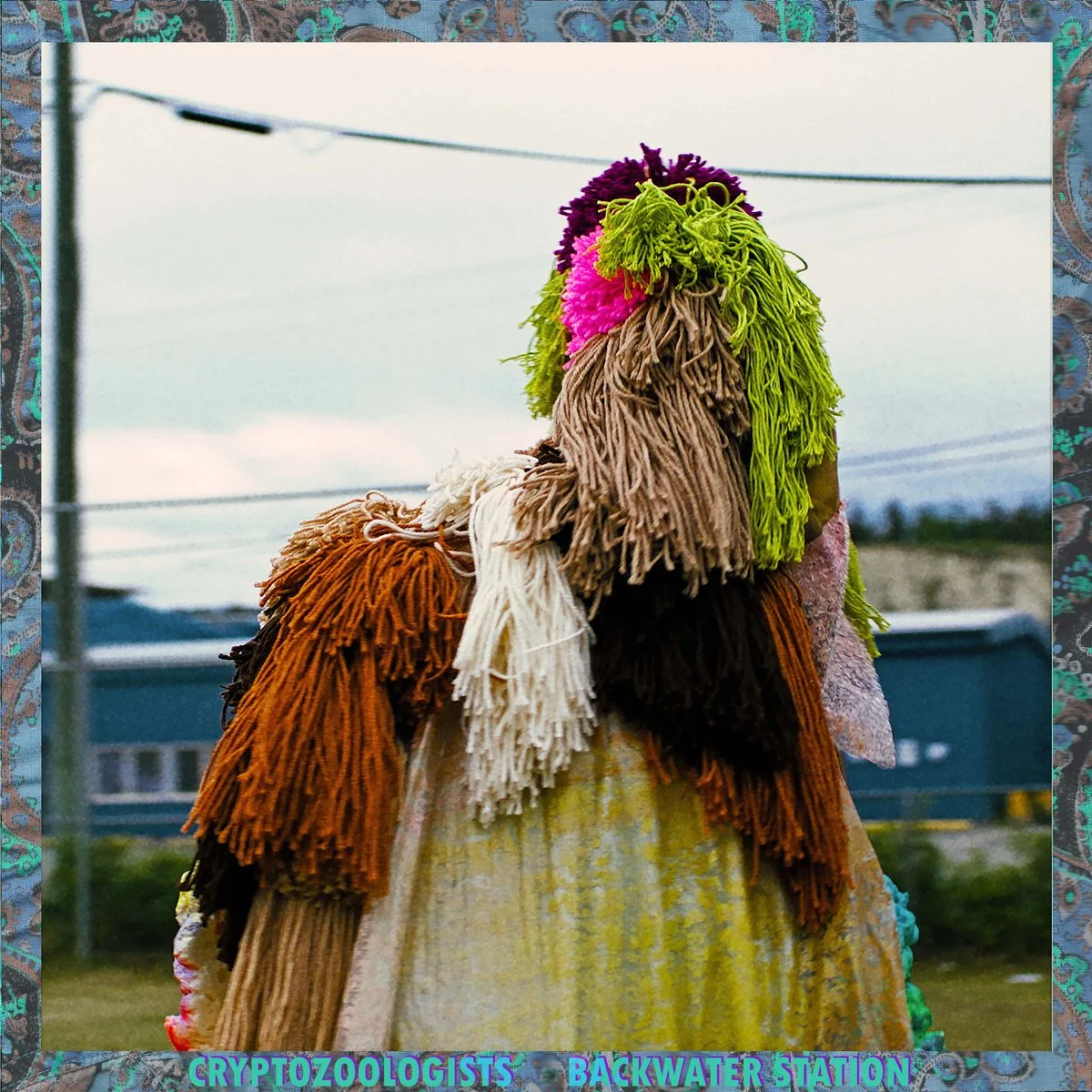
Self-released
Released on January 23th, 2026
There’s a temptation to dress up a place like Whitehorse in myth. Crisp air, untouched wilderness, a kind of pastoral clarity that feels increasingly out of reach. It’s the version of the North that we like to romanticise. On Backwater Station, Cryptozoologists aren’t interested in that version of the story. They stay in the parking lot.
Originally titled Songs of Mundanity and Realism, the album’s core ethos didn’t change with the more evocative rename, it just got a little more poetic cover. These songs are still preoccupied with the overlooked and the undesirable: gravel lots, public intoxication, the quiet indignities of urban life in a small, rapidly shifting city. Where others might look outward toward nature for transcendence, Cryptozoologists turn their gaze downward, sifting through the grit for something resembling truth.
Sonically, Backwater Station feels like a culmination of the band’s decade-long trajectory, scrappy, yes, but now sharpened with intent. There are clear touchstones here: the wiry nerviness of The Pixies, the literary sprawl of Wolf Parade, the elliptical songwriting of Destroyer. At times, you can hear echoes of Big Thief in the way the band lets songs breathe just long enough before tightening the screws again. But these aren’t borrowed clothes so much as reference points. The band sounds most like themselves when things start to fray.
There’s a looseness to the performances that feels deliberate. Recorded largely in first takes, the songs lurch and sway with a kind of off-kilter momentum, as if they might fall apart at any moment but never quite do. Guitars jangle and scrape, occasionally blooming into bursts of distortion before retreating back into something more restrained. The rhythm section often feels like it’s pulling in a slightly different direction than the melody, creating a constant low-grade tension that never fully resolves.
Zach McCann-Armitage’s vocals sit right in the middle of that tension. His delivery recalls the speak-sing cadence of Dan Bejar or Spencer Krug, but with a more ragged, unvarnished edge. Lines spill out in dense, image-heavy bursts, mundane details stretch into something surreal, or perhaps just seen clearly for what they are. There’s a strange push and pull between realism and abstraction: references to everyday encounters and urban decay are filtered through metaphors that feel just slightly askew, like reality viewed through dirty glasses.
That friction is where the album does its best work. Moments that might otherwise feel trivial - asking a neighbour for a jump in the dead of winter, navigating a sidewalk confrontation - are imbued with a quiet weight. Not dramatized, exactly, but reframed. The band seems intent on proving that there’s no hierarchy of subject matter, that the contents of a sewage lagoon can carry as much poetic gravity as a mountain range if you’re willing to sit with it long enough.
And that idea of “sitting with it” becomes something of a thesis. These songs resist release in subtle ways. They circle, stall, double back. Hooks emerge, but they’re often tangled up in knotty phrasing or interrupted by abrupt shifts in tone. Even when the band locks into something resembling a groove, there’s a sense that it could unravel at any moment. It’s not quite dissonant, but it’s rarely comfortable.
Still, there’s a strange charm that runs through all of it. For all its talk of doom, displacement, and everyday horror, Backwater Station doesn’t feel oppressive. There’s a looseness, even a quiet humor, in the band’s refusal to overstate their case. The irreverence of their previous work is still here, but it’s been refined - less of a wink, more of a shrug.
By the time the album winds down, that image of the “backwater station” starts to take shape: a lone observer at the edge of things, not detached, but embedded. Watching, cataloguing, trying to make sense of it all without pretending there’s an easy resolution. It’s a fitting metaphor for the band itself, ten years in, still scrappy, still uncertain of the outcome, but more committed than ever to the act of documenting what’s in front of them.
Backwater Station doesn’t offer escape, and it doesn’t particularly want to. What it offers instead is attention, unflinching, occasionally uncomfortable, but ultimately rewarding for those willing to meet it where it lives.