
Aquakultre - 1783
Next Door Records
Released on February 6th, 2026
Aquakulture is the musical alias of Lance Sampson, an artist based out of Halifax, Nova Scotia. His newest album, 1783, is an astounding work of art - a multi-genre concept album chronicling the history of his ancestors, Black Loyalists who were promised freedom after fighting for the British during the American Revolutionary War. These Loyalists consisted of over 3000 people of African descent who sailed from New York to Nova Scotia. Following their arrival, they were given little food, land, and supplies, but they went on to endure and settle dozens of Black communities across the province. The album is a thoroughly researched history lesson, but it is also a musical celebration of Sampson’s lineage and culture.
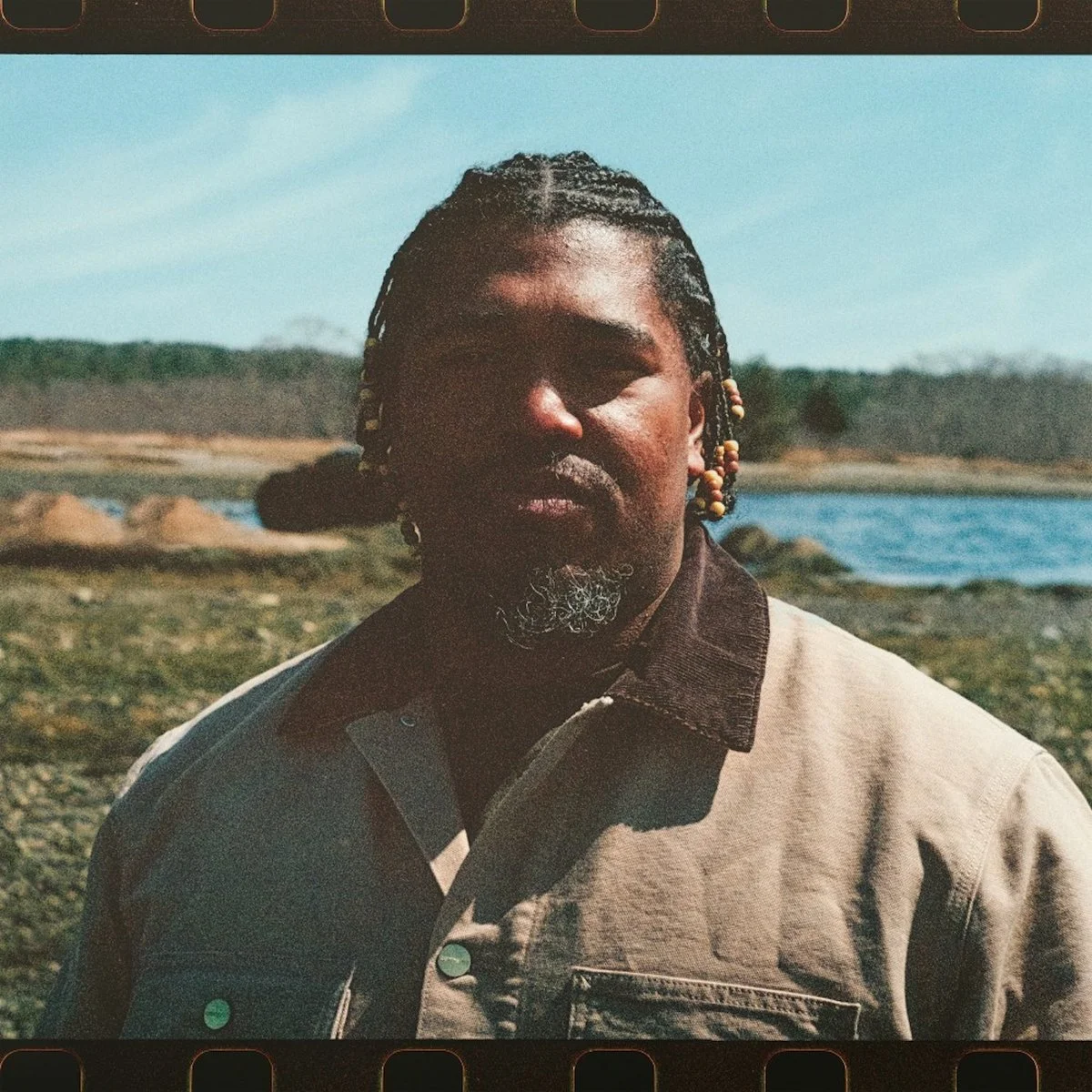
The front cover features a photograph of Sampson standing stoically, staring directly into the camera. The edges appear to be celluloid and give the impression that this is an old photo that might not be of Lance Sampson at all, but of one of his ancestors who has come before him. It looks like a document and a piece of history, enticing the viewer to dig deeper to see what’s underneath. By the time the album concludes, it is very apparent that 1783 is more than an album; it is a musical artifact that collects the songs and stories of Sampson and his ancestors.
The album begins with the soulful “What Are You Sayin”, a question the character in the song seems to be posing to themself as they make an important life decision. It could be a question Sampson is asking himself, pondering what he hopes to say and communicate to the listener throughout this album. When he sings “I’ve decided to take a road less traveled to observe what I’m missing inside,” he might be letting the audience know that he’s been reflecting and has something to say with this project. The title’s question could also allude to the number of people Sampson met and interviewed while researching his ancestral roots. The song is a beautiful composition full of delicate synth, guitar, and drums that dreamily carry Sampson’s vocal melody, punctuated by angelic backup vocals and pitch-perfect horn accompaniment.
The astounding horn section is on full display again during “Bags Packed.” With an infectious R&B stomp, the listener is carried along with the song’s character as they move from place to place. The track speaks to the nomadic lifestyle forced upon many Black people and their ancestors. Sampson’s vocals are jaunty, cocky, and full of swagger as he sings “put a brick in my bag and I got on that train track,” almost nodding and winking at the listener that he knows he isn’t going to be able to stay in one place for long.
Sure enough, the next track hammers this point home thematically as we hear a snippet of a letter sent from a soldier in the no.2 Construction Battalion, an army regiment that was the first and only all-Black unit in Canadian military history, which served in WW1. According to the Acadia Divinity College, “the Battalion had not been formed to offer equal opportunity for Black Canadians but as a last resort for the army, whose rejection of coloured volunteers caused upset in Black communities.” It is also another example of Black people once again packing their bags and uprooting their lives to head into uncertainty. This is the first of many living documents that will pop up throughout 1783, highlighting that this is not fiction. These are real people, and the inspiration for the songs comes from ancestors, family, and their lived experiences.
This seamlessly transitions into the gospel-like “Holy,” featuring steady piano, organ, Sampson’s serene vocals, and soaring choir harmonies. The song captures the sentiment a soldier might feel as they write or pray for their loved ones back home - “sometimes these words won’t make it home, just know that I love you.”
“La Joux” is a recording of a letter or prayer spoken entirely in French. The speaker wonders when their loved one might leave them and how long they will have to wait for their return. I wonder if Sampson is trying to root the listener in France, where the No. 2 Battalion would have served during some of WW1, as we hear the “left, right, left, right” of a soldier's marching cadence.
The next four tracks on the album serve as a centerpiece, a planet that the rest of the album orbits. It starts with “The Great Judgment Morning,” an American gospel/folk song that sounds like a home recording of a sing-along. The song describes a Biblical judgment day, a more than fitting allusion as the fragile, elderly voice sings us towards the gallows.
“Gallows” tells the personal story of Sampson’s great-great-grandfather, Daniel P Sampson, who was the last person to be executed in Halifax as a result of the systematic anti-black racism in Canada’s legal system. According to a recent CBC article, Sampson heard the story of his great-great-grandfather from his grandmother. He later connected with a lawyer who’d been looking into the case for 20 years, and in March 2025, 90 years after the execution, he petitioned for a criminal conviction review. The case is now before the federal justice minister. “Gallows” is a powerful blues rocker with groaning guitars and a chilling vocal performance. You can hear the pain and emotion as Sampson sings “city don’t give a goddamn ‘bout a black boy like me” and Sampson’s voice will give you chills when he screams “mama, mama please don’t let them take me to the gallows.” The song alludes to “this boy done chose war” and that the wrongfully accused Sampson was a veteran whose “medals won’t ever change that they treatin’ me rotten.” It is a protest song, demanding justice even if it comes a century later.
After the tragic tale of “Gallows,” “Keep Me Down” keeps the focus on crime and wrongful conviction, this time in a contemporary setting. As the main character has run-ins with “power trip cops” who try to keep him down, the song’s outro suggests hope with the refrain “I’m goin’ uphill.” Musically, this track is similar to the blues rock of “Gallows.” The drums, bass, and horns bury the listener with the song only coming up for air to hear a brief guitar solo and punchy piano hook. Sampson sings of injustice and shouts, “they chased me down in the street / brought me down to my knees / but they could not keep me down.”
The final song in the quartet at the center of 1783 is “Make That Change,” where we are treated to Sampson’s rapping chops. He is such a versatile songwriter and performer that these rap verses feel right at home amongst the R&B, soul, gospel, and blues. The song has a guest vocalist- the Juno Award-winning soprano, Measha Brueggergosman-Lee. For a minute, I thought it might have been a sample of Portia White, the first Black Canadian concert singer to achieve international fame, who also happens to be from Halifax. The soprano vocal haunts the background as Sampson reflects on his life with thoughtful lines like - “these prison sentences left me with visual scars / not physically, but mentally missin’ a part / my neighborhood coincidentally felt like a yard.”
These last four tracks remind me of the recent movie “Sinners.” Director Ryan Coogler has a scene in the film that functions as the movie’s thesis. It features a generation-spanning visual microcosm of the African Diaspora that emphasizes the importance and uniqueness of Black music, as people of different eras throughout human history dance and sing in a shared space. 1783’s centerpiece accomplishes a similar feat. Musically, the songs move through time. From genre to genre: gospel, to blues, to hip-hop, spanning over a century, and moving the listener narratively through the wrongful execution of Sampson’s great-great-grandfather, through to his own struggles with the law, and into his hopeful lyricism about breaking this cycle with his own children. It’s a masterclass in songwriting and track sequencing.
“The Avenue” seems to be referencing Crichton Avenue, a vibrant Black community in the Halifax area. Sampson explores this community and interviews many of its residents in his docuseries, “Generations: Black Memories of Nova Scotia,” which I highly recommend to learn more about the history of Black communities in Nova Scotia.
“Old Bones” provides another break in the music, this time featuring a woman telling a story about a young girl who died tragically at the age of four, falling out of a window. She speaks of this young girl endearingly, how she always carried around a black doll, and how she would yell up and down the street looking for the young boy who often hid her toy. This snippet of storytelling is a fitting transition into the next song, the wah pedal-infused R& B number, “Black Doll,” which seems to be very much inspired by the story of this little girl.
“Matriarchs” takes the listener on a fascinating musical journey. It starts as a slow and atmospheric country dirge, featuring the accomplished jazz/blues/gospel singer Linda Carvery. Carvery lends her evocative voice to the second verse and carries the song as the last quarter of the tune veers into a gospel-like call-and-response. After the song’s proclamation that “the mother’s will save you,” the personally revealing spoken word of “Father’s Fresh Start” chastises the patriarchs in Sampson’s life.
Kendrick Lamar’s DAMN, an album awarded the Pulitzer Prize for its virtuosic lyricism, explores the idea of damnation. Lamar poses questions about living a cursed or damned life and whether he will suffer damnation for his actions and choices. Sampson breaks similar ground in the easy- listening ballad, “I’ll Be Damned.” The song starts with a character living without water, a human necessity for survival, and the lack of which would point towards a damned life. But Sampson steers away from this idea and flips the meaning of damned. He begins sentimentally singing about the birth of his children, his decision to learn from his past mistakes, and how to break the cycle of male violence that he referenced on the previous track. Instead of alluding to a hellish damnation, Sampson utilizes the common idiom of "I'll be damned” to mean that he’s amazed and grateful to be living the life he leads.
The penultimate track is a home recording of a group of people singing the folk-style drinking song “Show Me The Way to Go Home.” While the folks in the recording may have had a couple of drinks, I think Sampson uses this song near the end of the record because the journey is almost over. He’s taken us from 1783, through the Great Wars and to present-day Black communities throughout Nova Scotia. We’ve met characters and tragically lost a few along the way. Sampson’s exhaustive research and hard work have left him tired, and he just wants to go home to Scotia, where he was born and raised.
“Scotia Born” brings it all home as guest vocalists Gary Beals and Hailey Smith sing proudly that “they thought we won’t survive, but our people thrived,” underlining one of Sampson’s theses that Black culture and his people have overcome centuries of hardship and are alive and stronger than ever today. The entire album is cinematic in scope, and this song serves as the denouement that brings it all together as Sampson repeats “Trust in what your ancestors planned / They knew we’d all survive / And we’d multiply / I know you heard before, we’re Scotia born.” The last sound the listener hears on the record is the laughter of a baby, a joyous cry that looks towards a hopeful future for the generations to come.
When I first began teaching high school in Nova Scotia 17 years ago, I was assigned to teach African Canadian History. As a privileged cis white male who went on to Minor in History at university, I was intimidated by the thought of teaching an African History course because I was taught little to no African Canadian History throughout my public and private education! To say I was floored after studying the curriculum and textbook would be a major understatement. It was a revelation. I was embarrassed by how little I knew. How did I not know about the Black Loyalists? Or the Jamaican Maroons who were deported from British plantations and a portion of whom ended up settling in Nova Scotia? Or the tragic destruction of Africville in Halifax, traumatizing and displacing an entire community in the not-too-distant past of the 1960s?
At a time when certain places on Turtle Island are actively attempting to dismantle diversity initiatives and are altering education curricula by removing history courses that focus on Black lives and marginalized groups, an album like 1783 is of great importance. Throughout my time with this album, I found myself drawing comparisons to Ryan Coogler’s Sinners and Kendrick Lamar’s Damn - works of art that are considered to be cultural triumphs, enticing their audience to understand the world through the lens of Black experiences. After spending the better part of a month immersed in the music and storytelling of 1783, it is undoubtedly clear that Aquakulture’s latest outing earns its place alongside these heavy hitters as another contemporary masterpiece.